

Every November, millions of shoppers eagerly anticipate Black Friday, searching for opportunities to purchase the things they want at discounted prices. Imagine a television that normally sells for $1,000 suddenly being marked down to $800. Shoppers celebrate the opportunity to purchase the same product at a 20% discount. After all, who doesn't appreciate getting more for their money?
Yet when the stock market experiences a similar decline, investors often react in precisely the opposite way. Rather than celebrating lower prices, they become anxious. Instead of looking for opportunities, they begin questioning whether they should invest at all.
But what if we approached temporary stock market declines with the same enthusiasm and perspective that we bring to Black Friday shopping?
Recent volatility, particularly among growth, technology, and artificial intelligence (AI) stocks, serves as a timely reminder that even some of the market's most prominent companies are not immune to sharp price declines. While the headlines and underlying catalysts may change, one fundamental truth remains: market volatility is a normal and unavoidable part of investing.
For disciplined, long-term investors, however, these temporary setbacks can present compelling opportunities to purchase quality investments at more attractive prices.
When markets decline, it's easy to become consumed by negative headlines and short-term uncertainty. However, history offers a much more encouraging perspective.
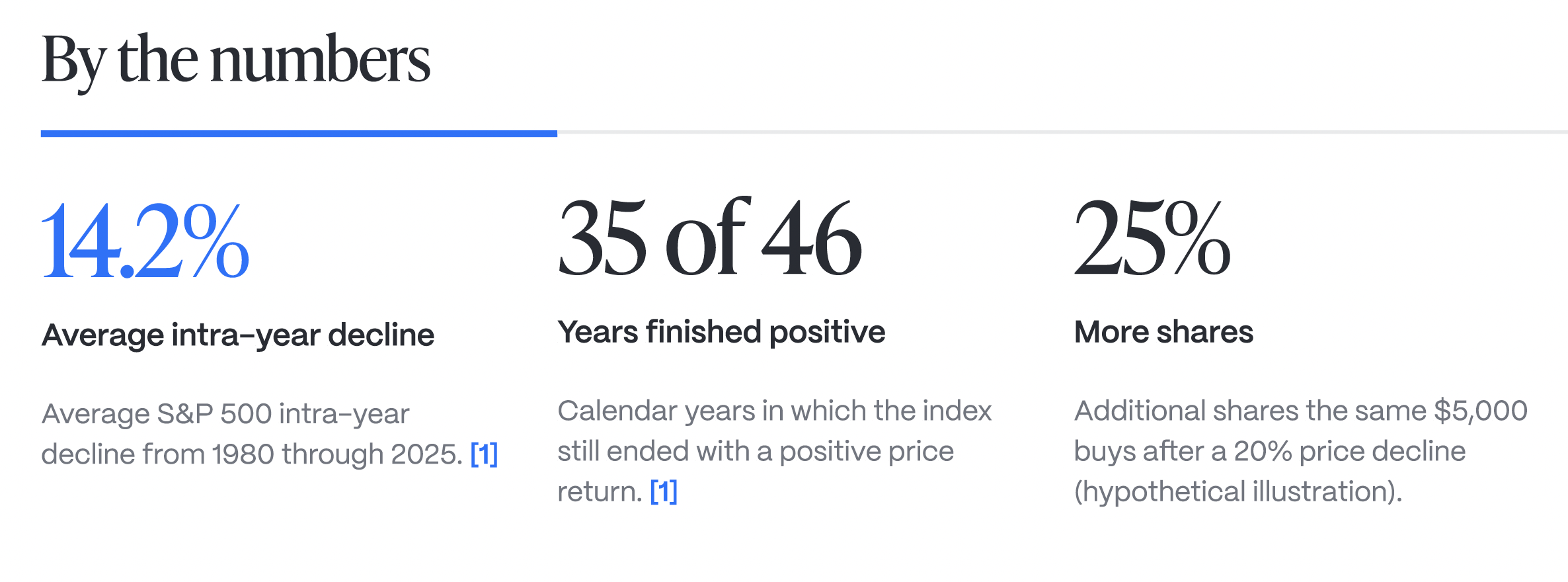
From 1980 through 2025, the S&P 500 experienced an average intra-year decline of approximately 14.2%. Despite these temporary setbacks, the index finished the calendar year with a positive price return in 35 of those 46 years.[1]
Think about that: the stock market experienced meaningful declines during many years that ultimately ended with positive returns.
In other words, temporary market declines are not necessarily indicators of a troubled investment strategy. They're often simply part of the journey toward long-term growth.
History also demonstrates the remarkable resilience of the stock market following particularly challenging periods.
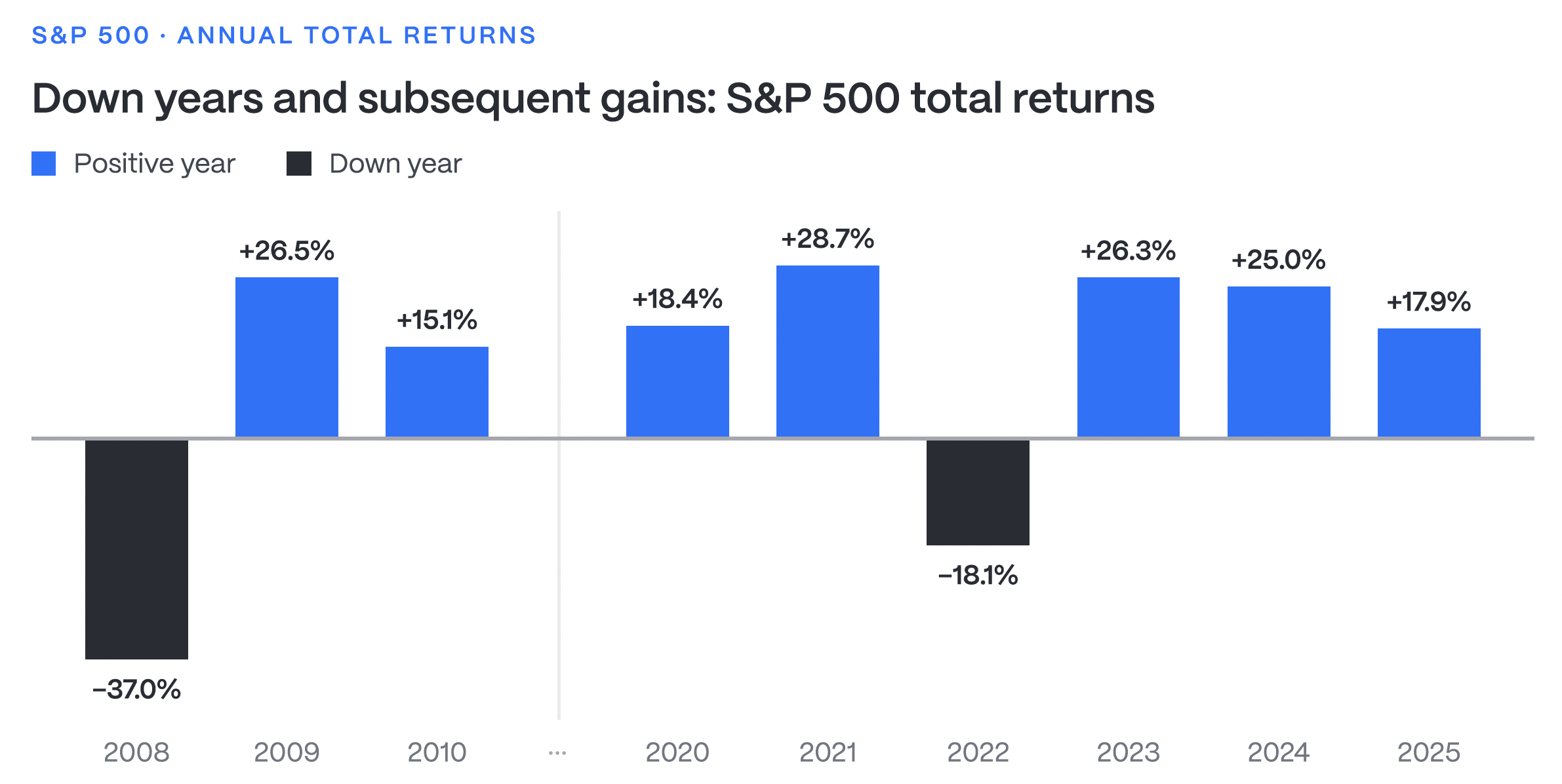
Consider the aftermath of the 2008 financial crisis. After declining 37.0% in 2008, the S&P 500 rebounded with total returns of 26.5% in 2009 and 15.1% in 2010.
More recently, following an 18.1% decline in 2022, the S&P 500 delivered total returns of 26.3% in 2023, 25.0% in 2024, and 17.9% in 2025.[2]
Of course, history does not guarantee that every market decline will be followed by an immediate recovery. Some downturns are more prolonged than others, and individual companies may never recover their previous values (see our emphasis on diversification below).
Nevertheless, the broader lesson is clear: the stock market has repeatedly demonstrated an ability to recover from adversity and reward patient, long-term investors.
Those who abandon their investment strategies during periods of uncertainty risk missing the very recoveries that make long-term equity investing so compelling.
Imagine walking into your favorite store and discovering that something you've been planning to purchase is suddenly available at a significant discount.
Would you be disappointed that the price had fallen? Probably not.
You'd likely recognize an opportunity to purchase something you already wanted while spending less money.
The same principle can apply to investing.
Suppose you've been planning to invest $5,000 in a diversified equity ETF. If that ETF declines in price while your investment objectives and financial circumstances remain unchanged, your $5,000 can now purchase more shares than it could just a few weeks earlier.
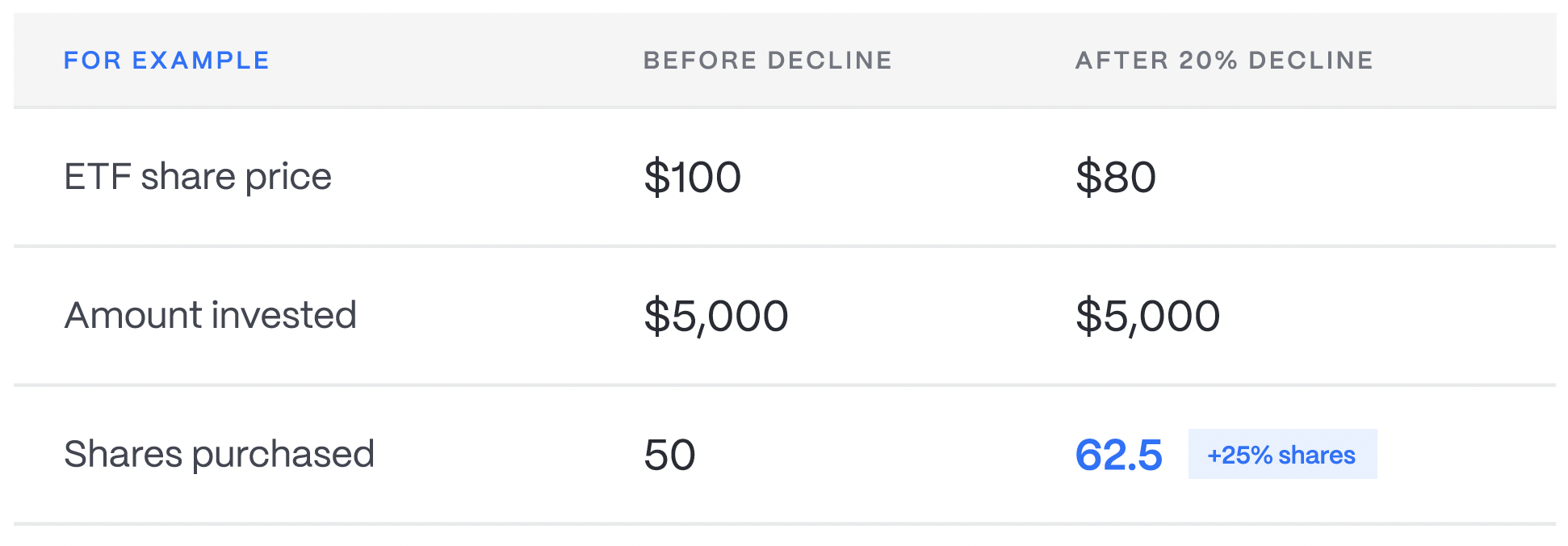
By investing at the lower price, you've acquired 25% more shares with the same amount of money. Should the investment subsequently recover and appreciate, those additional shares can contribute to greater long-term growth.
For disciplined, long-term investors, temporary market declines can create opportunities to accumulate more shares at more attractive prices.
And you don't necessarily need a large amount of cash sitting on the sidelines to take advantage of these opportunities.
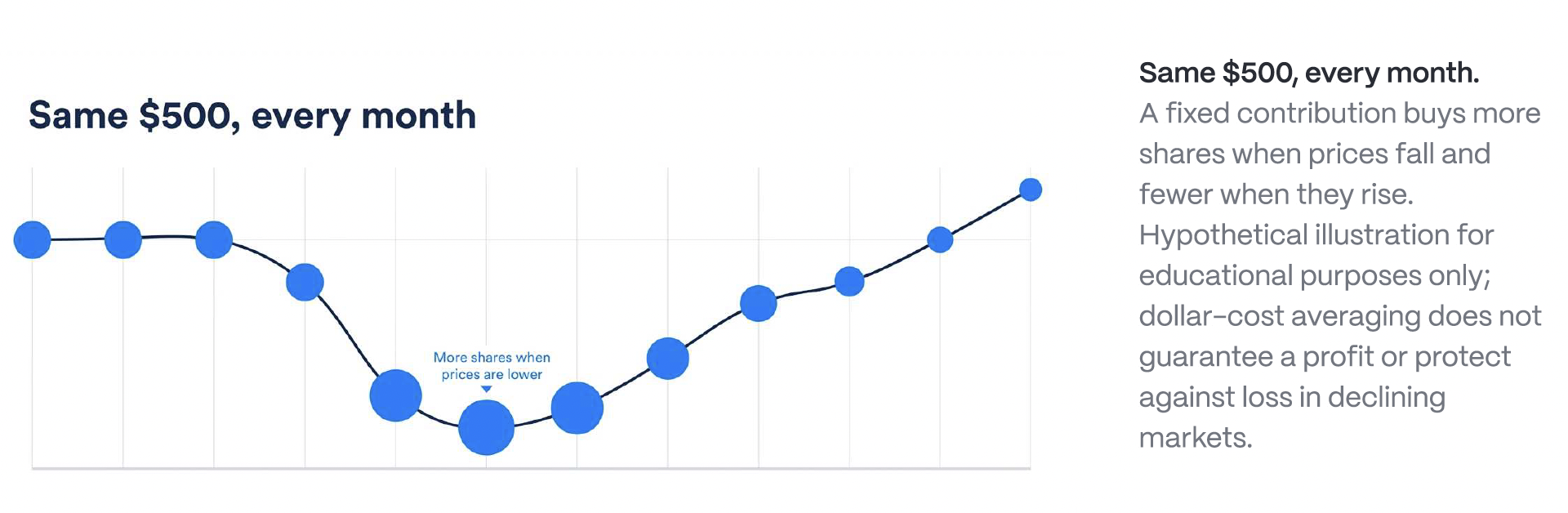
Consistent contributions, reinvesting dividends, dollar-cost averaging, and disciplined portfolio rebalancing can all help investors benefit from lower prices over time.
In fact, investors who are still accumulating wealth may have an especially compelling reason to welcome temporary market declines. While falling prices can be uncomfortable when reviewing an existing portfolio, they also allow new contributions to purchase additional shares at lower prices.
The key is approaching these opportunities with discipline rather than emotion.
Just as a wise Black Friday shopper enters the store with a shopping list and a budget, a prudent investor should approach market volatility with a well-defined investment strategy, adequate cash reserves, and a clear understanding of their financial goals.
The objective isn't to predict the exact bottom of the market. It's to recognize that temporary declines can create long-term opportunities.
At Inspire, we believe Christian investors shouldn't have to choose between pursuing their financial goals and remaining faithful to their biblical values. That's why we're committed to providing thoughtfully constructed, diversified investment solutions that allow investors to participate in the opportunities of the financial markets while aligning their portfolios with their Christian convictions.
Through our family of biblically responsible exchange-traded funds (ETFs) and professionally managed investment strategies, Inspire seeks to provide exposure across a broad range of companies, industries, asset classes, and investment styles.
This approach is designed to help investors maintain diversified market exposure through changing economic conditions, rather than depending too heavily on the success of any single company, sector, or investment opportunity.
Our goal is simple: to help Christian investors remain invested, pursue long-term financial growth, and honor God through the way they invest.
Central to this mission is our commitment to biblically responsible investing (BRI).
Using our proprietary Inspire Impact Score methodology, we evaluate companies based on their alignment with biblical values, seeking to avoid businesses involved in activities that conflict with those principles while identifying companies making positive contributions to the world.
Importantly, investing according to biblical values doesn't mean abandoning the principles of prudent portfolio management.
We believe diversification, disciplined investment management, and a long-term perspective are essential components of a thoughtful investment strategy. These principles become especially valuable during periods of heightened market volatility.
When stock prices decline, a diversified investment strategy can help investors maintain exposure to potential market recoveries without relying on the performance of a handful of individual stocks. Although diversification cannot eliminate market risk or guarantee positive returns, it can help reduce the risks associated with concentrating investments in individual companies or sectors.
And when market pullbacks create attractive buying opportunities, Inspire's investment solutions offer investors a way to put additional capital to work while remaining consistent with their biblical convictions.
We believe investors can be both financially disciplined and biblically faithful. They can pursue the opportunities presented by the stock market without compromising the values that matter most to them.
The history of the stock market tells an encouraging story.
Despite recessions, financial crises, geopolitical conflicts, inflationary pressures, and countless other challenges, the broader U.S. equity market has demonstrated remarkable resilience over time.
Temporary declines have repeatedly interrupted the market's long-term upward trajectory, but they have not eliminated its historical capacity for growth.
For long-term investors, that distinction is critically important.
Market volatility should not be viewed as a warning to retreat. In fact, it may instead represent an opportunity to strengthen a long-term investment strategy by acquiring additional shares at lower prices.
And as we've discussed, pursuing those opportunities doesn't have to come at the expense of diversification, financial discipline, or biblical convictions.
Through a thoughtful investment strategy, investors can seek to remain positioned for long-term market growth while managing risk and maintaining alignment with the principles that guide their financial decisions.
History suggests that investors who remain disciplined through difficult market environments are often better positioned to participate in the recoveries that follow.
And for those with available cash and a long-term investment horizon, temporary pullbacks may create particularly attractive opportunities.
As Black Friday approaches, millions of Americans will be searching for discounts on televisions, appliances, electronics, and countless other products.
But perhaps some of the most meaningful long-term buying opportunities aren't found in a department store or online shopping cart.
Perhaps they're found in the stock market.
If you've been considering investing additional cash, increasing your retirement contributions, or putting money that has been sitting on the sidelines to work, recent market volatility may present an opportunity worth exploring.
Rather than allowing negative headlines to dictate your investment decisions, consider whether lower prices might actually help advance your long-term financial goals.
After all, disciplined investors recognize an important distinction: a temporary decline in market price does not necessarily reflect a deterioration in an investment’s intrinsic value or its long-term growth potential.
The next time you see the stock market pulling back, remember the excitement surrounding Black Friday. While others may focus exclusively on falling prices, you may have an opportunity to purchase investments at more attractive valuations.
And with Inspire's biblically responsible investment solutions, you can pursue those opportunities while remaining committed to your Christian values and long-term financial objectives.
If you'd like to explore whether recent market declines present an opportunity within your investment portfolio, we encourage you to connect with an Inspire Advisor. Our team would be happy to help you evaluate your investment strategy and determine whether putting additional capital to work makes sense for your long-term financial goals.
Connect with an Inspire Advisor today: https://www.inspireadvisors.com/connect
[1] J.P. Morgan Asset Management, Guide to the Markets – U.S., “S&P 500 Intra-Year Declines vs. Calendar-Year Returns” (1980–2025).
https://am.jpmorgan.com/content/dam/jpm-am-aem/global/en/insights/market-insights/guide-to-the-markets/mi-guide-to-the-markets-us.pdf
[2] Slickcharts, S&P 500 Total Returns by Year Since 1926. Annual total returns include reinvested dividends.
https://www.slickcharts.com/sp500/returns
[3] Reuters, “Nasdaq set to confirm correction as AI spending worries mount,” November 5, 2026.
https://www.reuters.com/markets/us/nasdaq-set-correction-investors-reassess-ai-spending-boom-2026-11-05/
Advisory services are offered through Inspire Investing, LLC, a Registered Investment Adviser with the SEC. All expressions of opinion are subject to change without notice and are provided for informational purposes only. Nothing in this article should be construed as an offer, solicitation, recommendation, or endorsement of any particular security, strategy, or investment product. Investing involves risk, including the potential loss of principal. Please consult your financial advisor before making any investment decision. Inspire Investing integrates biblical principles into its investment philosophy through a Biblically Responsible Investing (BRI) approach. This values-based methodology reflects Inspire's interpretation of Scripture and may not align with the views or beliefs of all investors.
This content is provided for educational and informational purposes only and should not be considered personalized investment advice. Inspire does not provide legal, tax, or accounting advice. Please consult your own advisor regarding your specific situation.
Past performance is not indicative of future results. All performance figures referenced herein are historical and may not reflect current or future market conditions. Actual investor outcomes may vary. There is no assurance that any investment strategy will achieve its objectives or avoid losses.
Information and data referenced in this article may be obtained from third-party sources believed to be reliable but Inspire makes no representation as to their accuracy or completeness. All trademarks and service marks are the property of their respective owners.
Inspire Investing, LLC serves as the investment adviser to certain proprietary ETFs used in Inspire portfolios. Inspire receives management fees from these ETFs, creating a potential conflict of interest. Inspire seeks to mitigate this conflict through policies and procedures that ensure recommendations are made in clients' best interests and consistent with their unique goals and risk profiles. Additional details can be found in Inspire's Form ADV Part 2A.
Securities in the Index or in the Fund’s portfolio may underperform in comparison to the general securities markets or other asset classes. The Fund may focus its investments in securities of a particular industry to the extent the Index does. This may cause the Fund's net asset value to fluctuate more than that of a fund that does not focus on a particular industry. Fluctuations in the value of equity securities held by the Fund will cause the net asset value (“NAV”) of the Fund to fluctuate. The Fund is not actively managed and the Adviser will not sell shares of an equity security due to current or projected underperformance of a security, industry or sector, unless that security is removed from the Index or the selling of shares of that security is otherwise required upon a rebalancing of the Index as addressed in the Index methodology. Tracking error may occur because of imperfect correlation between the Fund’s holdings of portfolio securities and those in the Index. The Fund’s use of a representative sampling approach, if used, could result in its holding a smaller number of securities than are in the Index. To the extent the assets in the Fund are smaller, these risks will be greater.
Investors cannot invest directly in an index and unmanaged index returns do not reflect any fees, expenses or sales charges.
W. Andrew Stoner has been with Inspire since 2022 and serves as VP of Portfolio Strategy & Research, overseeing both our Trading and Insight Research departments. Additionally, he manages Inspire’s Tactical Risk Management and Core/Satellite strategies, leads Inspire’s Index Committee, and serves on Inspire’s Engagement Committee.
Prior to joining Inspire, Andrew worked at a Louisiana-based RIA as their Chief Investment Officer and Lead Advisor, managing approximately $450 million of invested assets and implementing active equity strategies aligned with biblically responsible investing (BRI) values.
In 2013, Andrew received a B.A. in Business Administration with a concentration in Economics from Southeastern Louisiana University, where he met his lovely bride, Bethany. Bethany and Andrew tied the knot in 2015 and have since had two adorable children, Adelyn Grace and Liam Ross, who keep them busy with endless playtime and trips to the Audubon Zoo.
Aside from family fun, the Stoner Family is passionate about serving their community through their church, First Baptist Church Covington, and spending quality time with loved ones. For Andrew, his faith and family are at the core of all that he does, including his career.
With a background as a Youth and College Associate Pastor, Andrew has always been driven to integrate his love for Jesus into all aspects of his life. In 2014, he discovered the world of BRI and never looked back. Since then, Andrew has remained steadfast to the mission of inspiring transformation for God’s glory by empowering Christian investors through biblically responsible investing excellence and innovation.


 (877) 859-6383inspire@inspireadvisors.com




Information on this website does not involve the rendering of personalized investment advice but is limited to the dissemination of general information on products and services. A professional adviser should be consulted before implementing any of the options presented. The information presented is believed to be factual and up-to-date, but we do not guarantee its accuracy and it should not be regarded as a complete analysis of the subjects discussed.
The firm only transacts business in states where it is properly registered or is excluded or exempted from registration requirements. Registration as an investment advisor does not constitute an endorsement of the firm by securities regulators nor does it indicate that the advisor has attained a particular level of skill or ability.
Different types of investment involve varying degrees of risk, and there can be no assurance that any specific investment will either be suitable or profitable for a client's investment portfolio. No client or prospective client should assume that any information presented and/or made available on this Website serves as the receipt of, or a substitute for, personalized individual advice from the adviser or any other investment professional.
National Admin Office: 3597 E Monarch Sky Ln, Suite 330 Meridian, ID 83646; Phone: (877) 859-6383 Investment advisory services offered through Inspire Advisors, LLC, a Registered Investment Advisor registered with the SEC.
© Copyright - Inspire Advisors, LLC

